A 72-Year-Old Nigerian Grandmother Reveals the Balanced-Eating Approach That Has Helped Her Manage Her Blood Sugar for 28 Years Using Her Own Kitchen, Her Own Market Ingredients, and Zero Food Elimination. Alongside Her Doctor.
She was diagnosed at 44. The doctor said "watch your diet." She eliminated rice. She eliminated yam. She eliminated plantain. She eliminated everything she loved. Her sugar didn't improve. Her joy disappeared. Then her grandmother showed her the old-school way: not elimination. Balance.
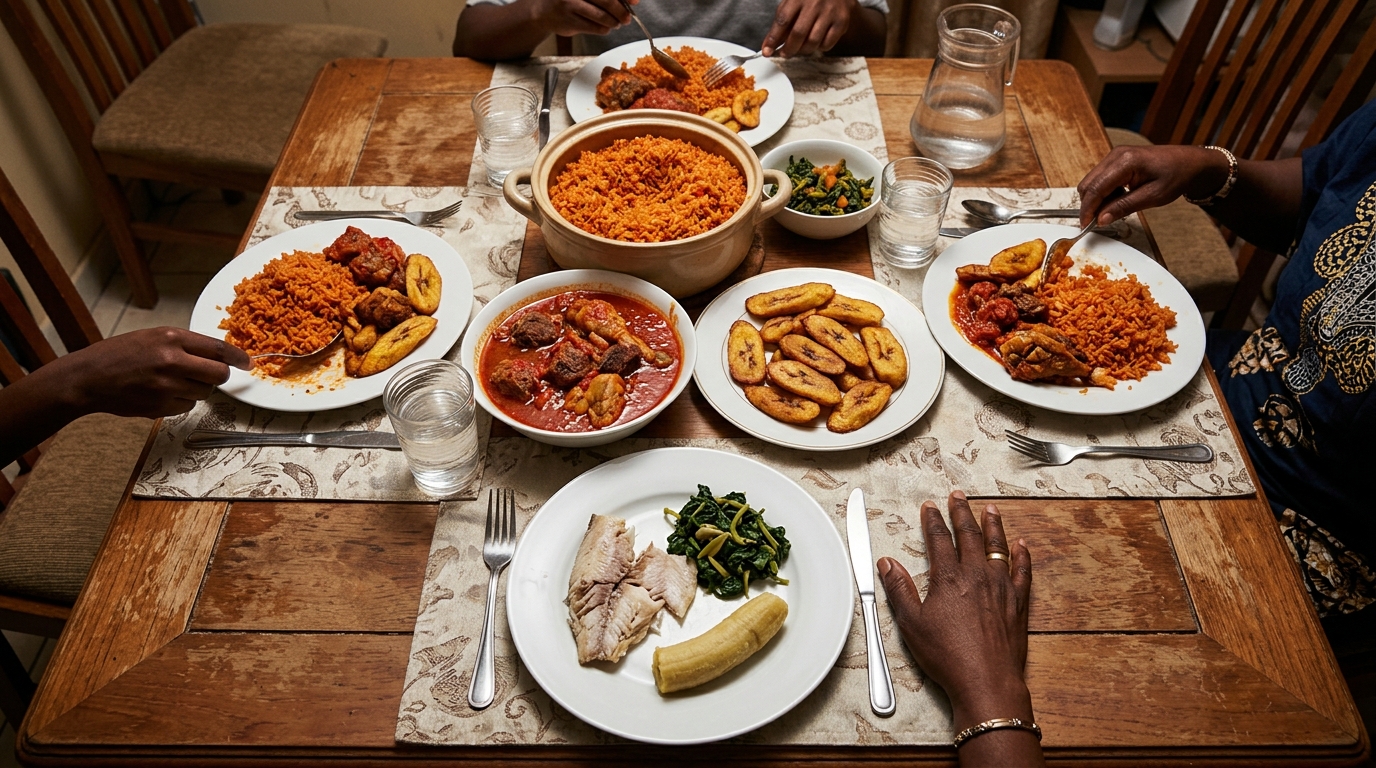
The plate.
You used to look at a plate of food and see dinner. Now you look at a plate of food and see a number. Rice: spike. Yam: spike. Plantain: spike. Garri: spike. Every food you grew up eating, every meal your mother made, every plate at every gathering, every celebration, every Sunday -- all of it now filtered through one question: "What will this do to my sugar?"
You are 48. You were diagnosed with elevated blood sugar 5 years ago. In those 5 years, you have tried 4 different diets. Each one started the same way: strict elimination. No rice. No yam. No plantain. No garri. No bread. Boiled vegetables and grilled fish. Every meal a punishment. Your family eats jollof rice. You eat boiled vegetables. Your children eat pounded yam and egusi. You eat steamed fish and cucumber. You sit at the same table eating different food. Alone in a full room.
Each diet lasted 3-6 weeks. Then the restriction broke. Because restriction always breaks. You ate rice at a family gathering because the vegetables weren't there and you were hungry and everyone was eating and you were tired of being the person who "can't eat that." Your sugar spiked. The guilt arrived. The diet restarted. Stricter. More elimination. More punishment. More failure.
The plate is not the enemy. The approach to the plate is the enemy. And the approach you have been using -- eliminate everything -- is the approach that keeps failing. Because it was never designed to be lived. It was designed to be endured. And nobody endures forever.
"I have been managing elevated blood sugar for 5 years. In those 5 years, I have started and abandoned 4 different diets. Each one eliminated the foods I love. Each one worked for 3-6 weeks. Each one broke at a gathering or a celebration or a Tuesday when I was just tired of boiled vegetables."
"My family eats together every evening. I eat different food. At the same table. My husband eats rice. My children eat yam. I eat steamed fish and garden egg. They don't say anything. But the plate in front of me says everything: you are the person at this table who cannot eat what everyone else is eating. Diabetes made me a guest at my own dining table."
"The worst part is not the restriction. The worst part is that the restriction doesn't even work long-term. My HbA1c was 8.1% when I started eliminating. After 5 years of starting and stopping diets, it is 7.8%. I have suffered for 5 years for a 0.3% improvement. Something is wrong with the approach. Not with me. With the approach."
If you eliminate foods and the diet keeps breaking, if you sit at your own table eating different food from your family, if your blood sugar has barely improved despite years of restriction, if you are tired of diets that work for 3 weeks and fail by week 6, keep reading. Alongside your doctor.
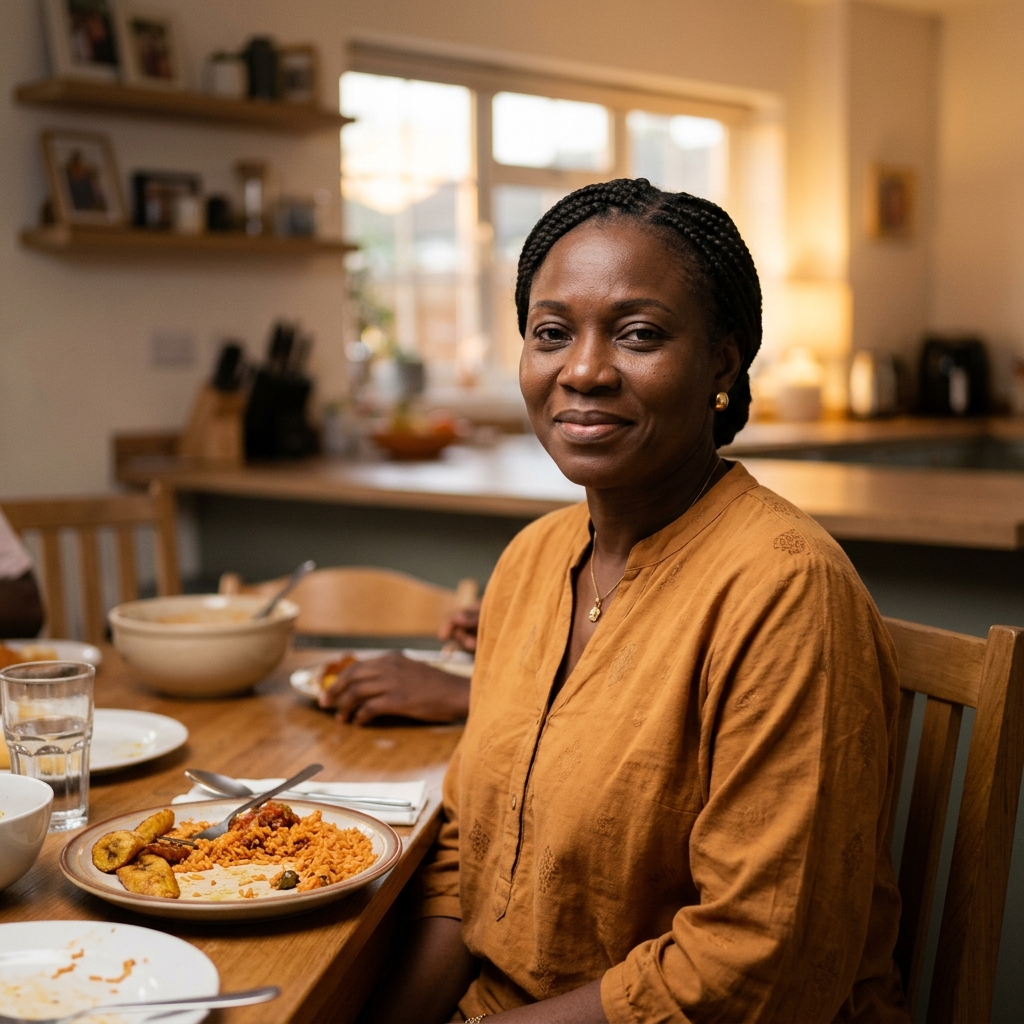
Chidinma A.
48. Lagos. Diagnosed 5 years ago. 4 failed diets. Until Mama Aduke showed her the old-school way: not elimination. Balance.
started
abandoned
improvement
Total Elimination Diet #1
No rice. No yam. No plantain. No bread. Boiled vegetables and grilled fish. Lasted 6 weeks. Broke at a birthday party when the only food available was jollof rice. Ate 2 plates out of deprivation. Sugar spiked to 14.2.
Keto-Inspired Diet
High fat, no carbs. Lost weight. Felt terrible. Couldn't sustain it in a Nigerian kitchen where carbs are the foundation of every meal. Broke after 4 weeks. The weight returned. The sugar didn't improve.
"Diabetic-Friendly" Meal Plans
Downloaded from an American website. Oatmeal and berries for breakfast. Quinoa salad for lunch. She has never seen quinoa in Mushin market. The plans assumed foods that don't exist in her kitchen.
Herbal Sugar Remedies
Bitter leaf water. Moringa powder. Scent leaf tea. N85,000 over 3 years. Her sugar fluctuated with her diet, not with the herbs. The herbs changed nothing. The diet changes changed everything -- temporarily.
"Small Portions" Approach
Ate everything but in tiny amounts. Still hungry after every meal. Still thinking about food 2 hours later. Snacked on "approved" foods. The snacking added up. The portions were too small to satisfy and too frequent to control.
Giving Up Entirely
3 months of eating whatever she wanted because "the diets don't work anyway." HbA1c climbed to 8.4%. The doctor increased her medication. The giving up was the body's response to 5 years of unsustainable restriction.
A family gathering in Oyo State. Among the older relatives: Mama Aduke. 72. Diagnosed with elevated blood sugar at 44. Managed it for 28 years. She was cooking jollof rice when Chidinma arrived. Not brown rice. Not cauliflower rice. Jollof rice. The regular kind. From her kitchen.
Chidinma stared at the plate. "Mama, you have sugar. How can you eat rice?"
Mama Aduke had never eliminated a single food from her diet. Not rice. Not yam. Not plantain. Not garri. In 28 years, her approach was consistent: balance every plate. Every meal contains three things in specific proportions: the starch (rice, yam, plantain), the fibre (vegetables), and the protein (fish, chicken, beans, eggs). The proportion -- not the elimination -- is what manages the sugar response. Alongside her doctor and her medication.
The Balanced Plate Framework
Every plate divided into three zones: starch (1/4 of the plate), vegetables (1/2 of the plate), and protein (1/4 of the plate). Not elimination. Proportion. Rice stays. Yam stays. Plantain stays. But they share the plate with vegetables and protein. The balance slows the sugar release.
The Nigerian Kitchen Food Guide
Every common Nigerian food categorised: which foods are starches, which are proteins, which are fibre-rich vegetables. How to combine them. What to pair with rice. What to pair with yam. What to pair with garri. Your market. Your ingredients. Your kitchen. Not American food. Your food.
Meal Timing and Spacing
When to eat, how long between meals, why spacing matters for blood sugar stability. The timing framework that prevents the spikes that come from eating one large meal and the crashes that come from eating too little.
Gatherings, Celebrations, and Sundays
How to eat at parties, owambe, church gatherings, and family Sundays without either eliminating everything or abandoning the method entirely. The social eating framework that keeps balance without making you the person who "can't eat that."
Working With Your Doctor
How to bring your food data to your next appointment. What to track. What to discuss with your doctor about how your eating interacts with your medication. The method supports medical care. It does not replace it.
The first evening. The Balanced Plate Framework applied. Chidinma served herself: a quarter-plate of rice (the starch she had been eliminating for 5 years), half a plate of vegetable soup with spinach and ugwu, and a quarter-plate of grilled fish. The same table. The same food as her family. The same rice.
She checked her blood sugar 2 hours later. 7.6 mmol/L. After eating rice. Her post-meal reading after eating rice was 7.6. For 5 years, she had believed rice would spike her to 12 or 14. The balanced plate produced 7.6. Because the vegetables and protein slowed the sugar release from the rice. The rice was never the enemy. The plate with ONLY rice was the enemy.
She sat at the table with her family and ate the same food for the first time in 5 years. Her husband looked at her plate. Then at her. He didn't say anything. He didn't need to. The plate said it: she was no longer a guest at her own dining table.
4 weeks of the Balanced Plate Framework. 4 weeks of eating rice, yam, plantain -- balanced, not eliminated. 4 weeks of the same table, the same food, the same family. Her HbA1c: 7.1%. Down from 7.8%. In 4 weeks. Without eliminating a single food.
5 years of elimination diets: 0.3% improvement (8.1% to 7.8%). 4 weeks of balanced eating: 0.7% improvement (7.8% to 7.1%).
The balanced approach produced more than twice the improvement in one-tenth the time. Not because balance is magical. Because balance is sustainable. Chidinma followed it for 4 weeks without breaking because it didn't require her to stop eating the foods she loves. It required her to balance them. And balance can be lived. Elimination can only be endured. Alongside her doctor and her medication.
"I eliminated rice for 3 years. My HbA1c barely moved. The Balanced Plate Framework brought rice back. My HbA1c dropped. Because the balance mattered more than the elimination. My doctor confirmed: keep doing this."
"The Nigerian Kitchen Guide changed everything. Every other resource assumed I eat oatmeal and salad. I eat amala and ewedu. Pounded yam and egusi. This guide covers MY food. With proportions, combinations, and timing."
"The social eating section saved Christmas. I ate jollof rice at the family table. Balanced plate. Vegetables first. Protein. Then the rice. My sugar at 7.4 after Christmas dinner. First time in 4 years I didn't sit out the meal."
"I'm in London. Nigerian. My mother sent me this guide. I had been doing keto for 2 years with minimal results. The balanced approach using Nigerian foods produced better numbers in 3 weeks. Alongside my GP."
"My doctor said: 'Whatever you changed, keep doing it.' I showed her the Balanced Plate Framework. She nodded. She said it aligns with current nutritional guidance. The old-school way is the evidence-based way."
"I cried the first night I ate pounded yam and ogbono. Not because of the food. Because of the normalcy. I was eating my food again. At my table. With my family. After 3 years of boiled vegetables alone."
I documented Mama Aduke's approach because no person managing blood sugar should eat different food from their family at their own table. No person should cycle between strict diets and guilty relapses for years with barely any improvement. No person should eliminate every food they love when BALANCE achieves more than elimination ever did. And no person should believe that managing blood sugar means punishing themselves with restriction. The old-school way is balance. Not elimination. Alongside your doctor.
The Old-School Balanced-Sugar Method
Balance the plate. Keep the food. Manage the sugar. Alongside your doctor.
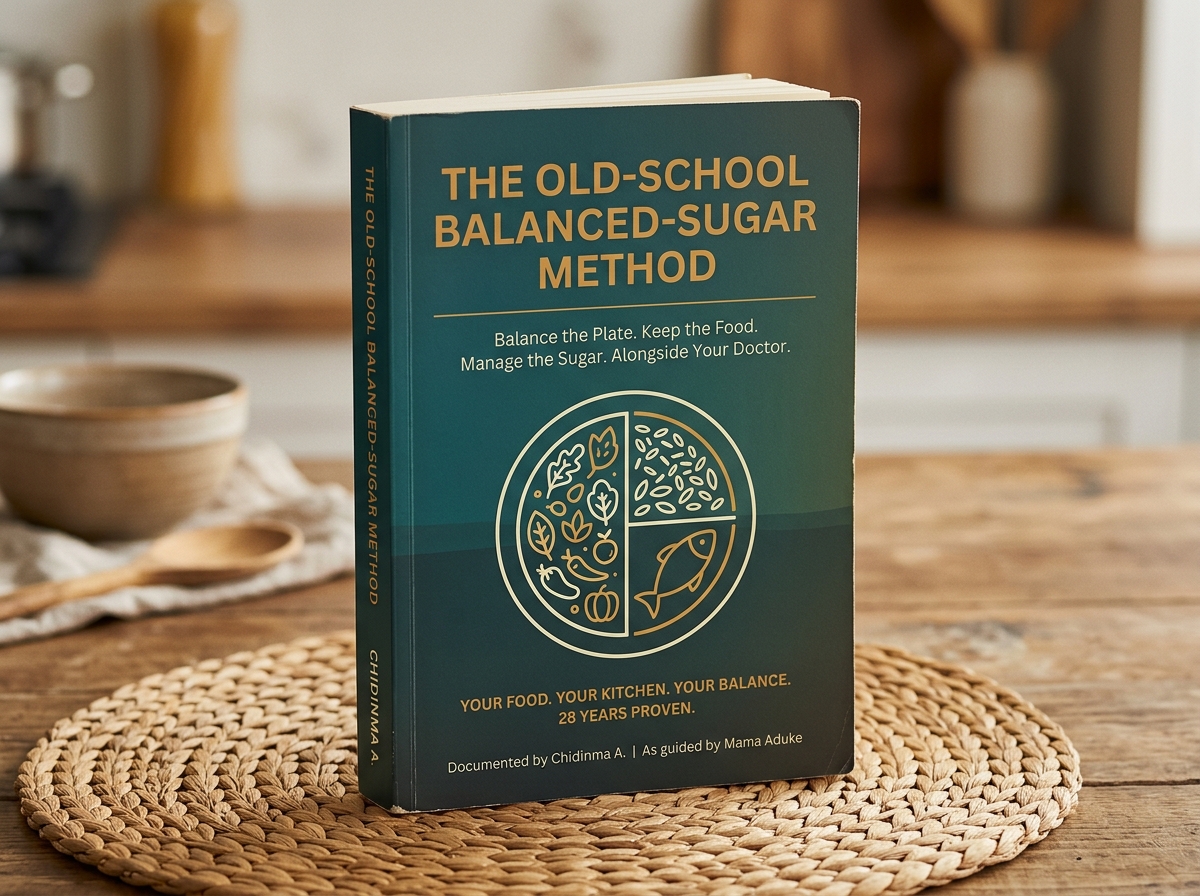
The Balanced Plate Framework
Every plate: 1/4 starch, 1/2 vegetables, 1/4 protein. The proportion that slows sugar release without eliminating a single food. Illustrated. Specific. Practical.
The Nigerian Kitchen Food Guide
Every common food categorised: starches, proteins, fibre. How to combine them for balance. Rice + what. Yam + what. Plantain + what. Your market. Your kitchen.
Meal Timing and Spacing
When to eat. How long between meals. Why spacing prevents spikes and crashes. The daily rhythm that keeps sugar stable.
Social Eating Framework
Parties. Owambe. Church. Sunday rice. How to balance the plate at every gathering without being the person who "can't eat that."
Working With Your Doctor
What to track. What to bring. How to discuss food and medication interaction. The method supports your doctor. Never replaces.
Instant download. Both bonuses included. 21-day guarantee.
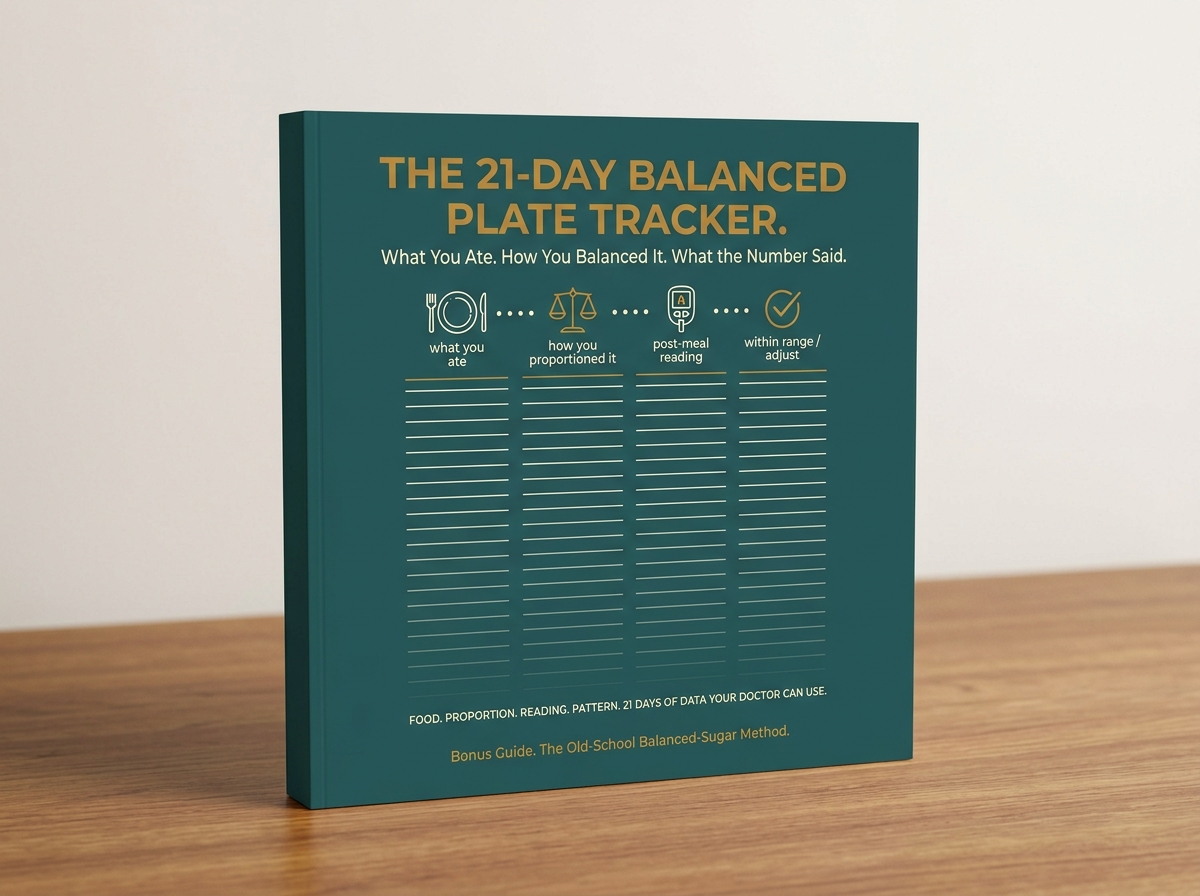
The 21-Day Balanced Plate Tracker
Daily tracking: what you ate, how you balanced it, your post-meal reading. 21 days of data showing your body's response to balanced eating. Data you bring to your doctor.
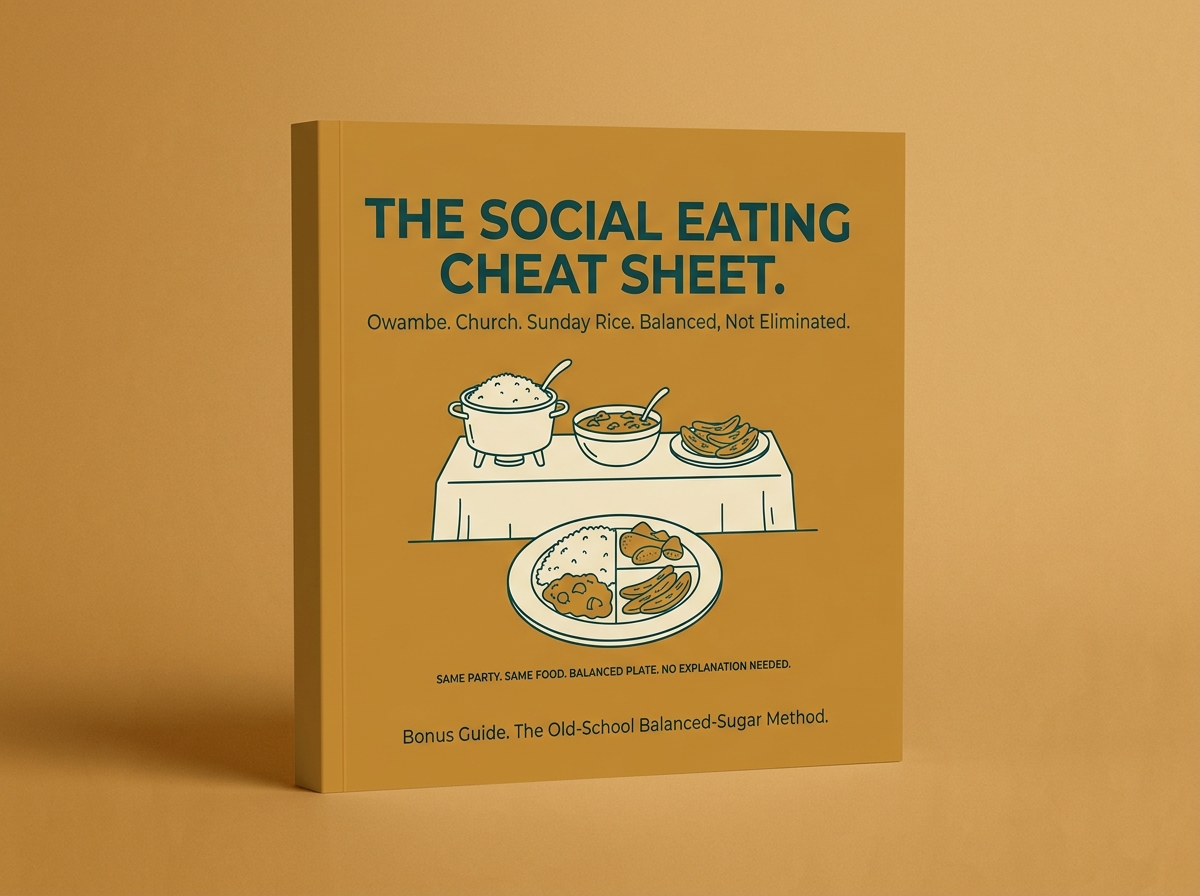
The Social Eating Cheat Sheet
One page: how to balance your plate at owambe, church, family gatherings, and restaurants. What to eat first. How to proportion. How to enjoy the food without the spike. Pin it in your bag.
21-Day Conditional Guarantee
Follow the Balanced Plate Framework for 21 days alongside your doctor. If your post-meal readings haven't improved, if the method doesn't make managing food easier, full refund. Keep both bonuses.
Balance or your money back.
Another Diet That Eliminates Everything
Another 3 weeks of boiled vegetables. Another family dinner eating different food. Another gathering where you "can't eat that." Another diet that breaks. Another guilt cycle. Another year of 0.3% improvement for 12 months of suffering.
Elimination works for 3 weeks. Balance works for 28 years. Mama Aduke is the proof.
Eat Your Food. Balance Your Plate.
This evening: 1/4 rice. 1/2 vegetables. 1/4 protein. The same food as your family. At the same table. Post-meal reading: manageable. Because the plate is balanced.
N9,800. Your food stays. Your family stays. Your sugar stabilises. The old-school way. Alongside your doctor.
P.S. #1: What did you eat for dinner last night? Was it different from what your family ate? N9,800 to eat the same food at the same table. Balanced. Not eliminated.
P.S. #2: Mama Aduke is 72. Diagnosed at 44. HbA1c: 6.4%. She eats rice. She eats yam. She eats plantain. She has eaten them for 28 years. The difference is balance, not elimination. N9,800 for the old-school way. Alongside your doctor.